Sustainable drainage specialist Sudsplanter Ltd has supported a rainwater management project led by Scottish Water and Dundee City Council, through the Water Resilient Dundee partnership.
The partnership aims to manage Dundee’s rainwater more naturally, reduce local flood and pollution risk, build climate resilience and create greener spaces, while engaging with communities.
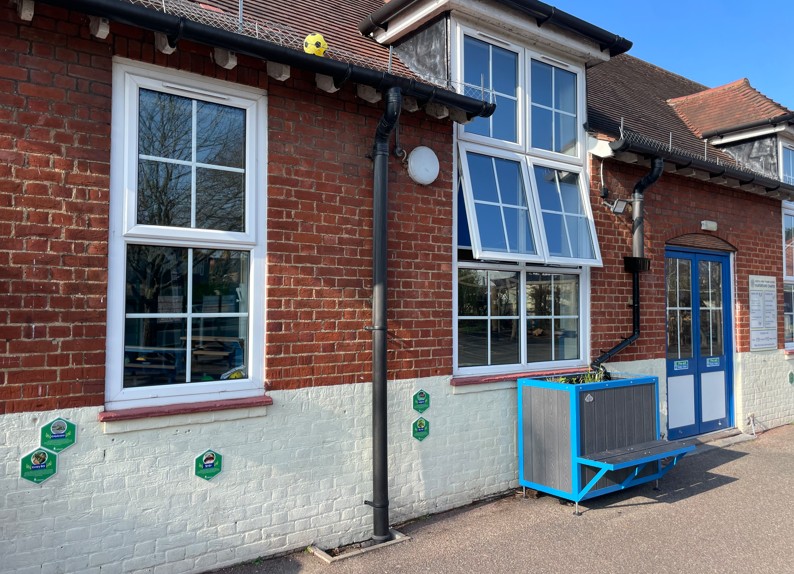
St Mary’s Community Centre, in the north of Dundee, was identified as a suitable location for a series of small-scale sustainable drainage systems (SuDS), including two SuDSPlanter rain gardens, to ease pressure on the combined sewer network. A key aim was to make SuDS more accessible and build community understanding and trust, ahead of a larger planned project.
Combined sewers
Parts of Dundee have experienced significant flooding in recent years, including in August 2025, when drainage networks were overwhelmed during a sudden and intense storm. Approximately 88% of Dundee’s sewers carry both rainwater and sewage – the highest concentration of combined sewers in Scotland. In addition, 13 culverted watercourses historically connect into the network, increasing flood risk during storms.
Although St Mary’s Community Centre sits upstream of flood-prone areas, rainwater runoff from the site ultimately enters the combined sewer network and contributes to downstream flooding.
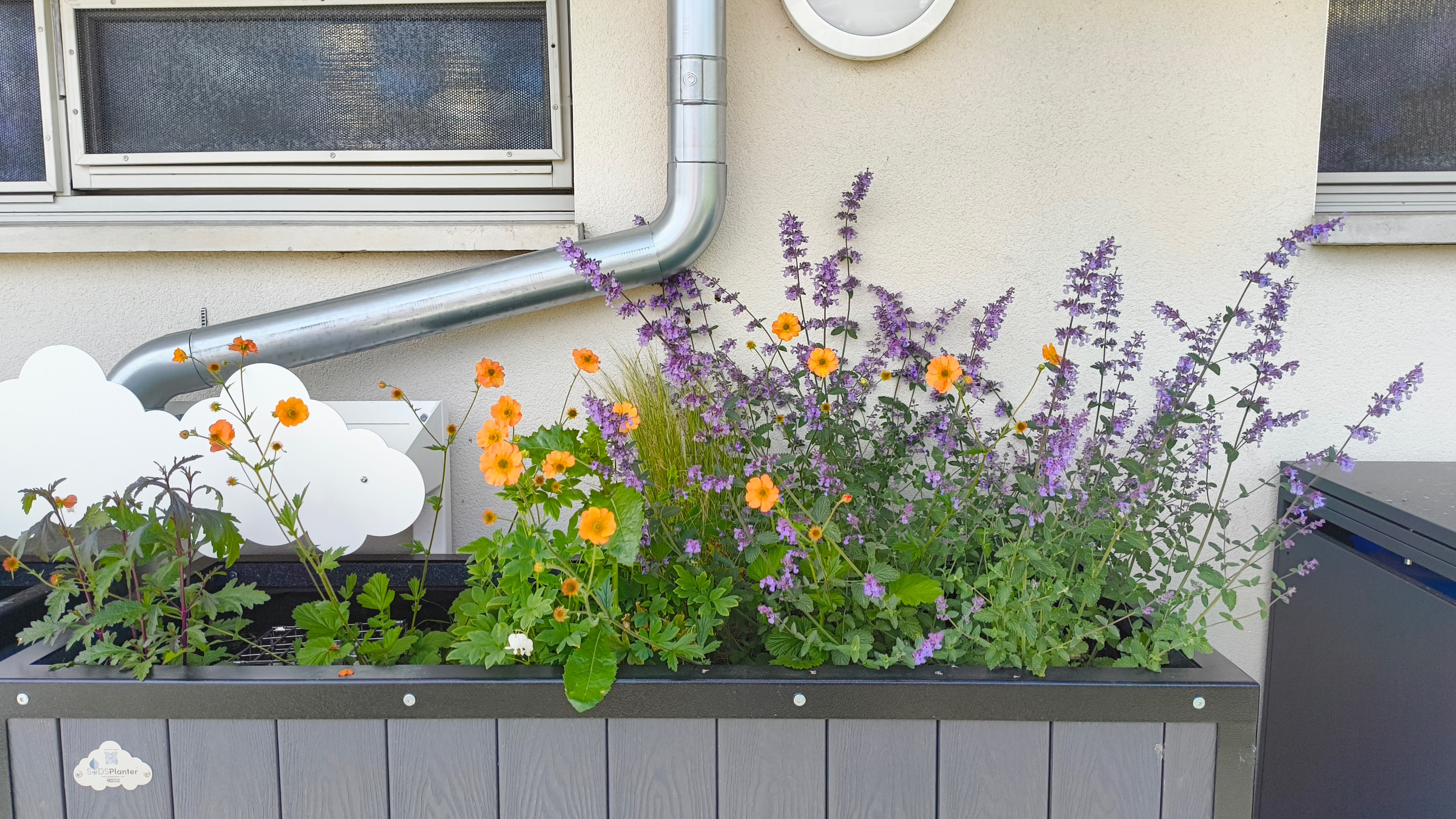
Among new sustainable drainage features were two SuDSPlanter units which were connected to a new roof downpipe at the northern end of the community centre. SuDSPlanters are design-engineered rain gardens that intercept roof runoff via rerouted downpipes, and direct flows into a system of planters – and away from drains and sewers – during heavy rain. Water is temporarily stored and filtered through the SuDSPlanter system before overflowing, when required, into a new drainage channel that conveys excess water to an adjacent rain garden.
Within each planter, water – as well as being taken up by plants – is filtered by a deep, layered soil mix, temporarily stored then released in a controlled way. Planters also provide drought resilience by retaining moisture and gradually releasing it into the soil during dry periods. The community centre chose interactive cloud-trays as a feature that directs rainwater into the planters.
Specially selected plant species, suitable for the local conditions and aspect, have improved biodiversity and created new wildlife habitats. Information boards explain how the system works.
Together, the new SuDS measures create a tangible example of sustainable water management in action and have transformed a simple grassed area into an attractive green space. It is hoped visitors to the community centre will see the benefits of the SuDS and consider installing similar systems on their own properties.
Dominic McBennett, catchment planner, Scottish Water, said: “The Water Resilient Dundee strategy is part of our transition towards more holistic, sustainable and adaptable water management. This represents a significant shift from reactive solutions to proactive, integrated systems that enhance the urban environment.
“St Mary’s Community Centre is a visible example of how this works in practice and demonstrates what sustainable drainage means. The planters are proving to be very robust, and we’ve had positive feedback from the community, particularly about the cloud trays – kids love seeing them in action when it’s raining.
“They have also given us a massive biodiversity boost and helped us give something back to the community rather than just a grey pipe in the ground.”
Rebecca Wade is a senior lecturer in environmental science at Abertay University, who was commissioned to support community engagement and education around the project.
She said: “It is absolutely brilliant to see the retrofit measures at St Mary’s Community Centre complete. The systems look great and will deliver water and nature services for many years to come.
“Collaborative, co-designed and co-funded SuDS projects, like this, are often the best. They are designed with community and stakeholder needs in mind and can add value to other agendas.
Community engagement
The St Mary’s project was designed as an early intervention, to build community relationships ahead of the main project in the area, Strathmartine Connections. Community input was key, with the project team working closely with volunteers to co-design the space.
Scottish Water will maintain the planters for the first three-years, before handing over to trained community centre volunteers.
Results:
The SuDSPlanter installations at St Mary’s Community Centre are:
- Diverting significant volumes of rainwater away from sewers during storms
- Creating new habitats and improving biodiversity
- Making SuDS visible and accessible to the community
- Supporting learning through hands-on engagement
- Encouraging community co-design and ownership of assets
- Informing future nature-based flood mitigation initiatives
By infiltrating runoff locally, the St Mary’s scheme also reduces the amount of rainwater unnecessarily pumped and treated at wastewater treatment works – cutting energy use, operational costs and pressure on infrastructure.
Lorna Davis, director at Sudsplanter, said: “We were proud to support the important work of Water Resilient Dundee at St Mary’s which is a brilliant example of collaboration between local authorities, utilities, suppliers and communities.
“Small-scale interventions like this deliver many benefits beyond flood mitigation, including raising awareness and creating greener neighbourhoods. The planters have shown their worth during some heavy downpours and, thanks to the thriving plants, are attracting bees in part of the site that previously had no biodiversity.
This was the first SuDSPlanter installation for Water Resilient Dundee. Following the success of the scheme, the partnership is exploring further installations elsewhere in the city.