A water innovation project set to transform how control room alarms are managed has reached three major milestones, moving a step closer to helping utilities identify and respond to operational issues more effectively.
Smart Alarm Management (SAM), a collaborative, Ofwat Innovation funded Catalyst project, aims to improve how alarms are triaged, prioritised and actioned using artificial intelligence (AI), machine learning and data modelling.
SAM will give controllers the ability to identify root causes more quickly, enabling faster and more informed decisions, to assist with preventing incidents such as flooding, pollution and water supply interruptions.
The project has two workstreams: the Technical workstream, which is building an intelligence layer from existing alarm data, and the Alarm Management Guidelines workstream, which will establish standardised ways of managing alarms, and is based on alarm standards developed in the oil and gas sectors.
Since launching at the Northumbrian Water Innovation Festival in July 2026, both workstreams have made significant progress and have reported two key achievements:
- The Technical workstream has completed its architectural designs and AI roadmap. These clearly outline how the SAM tool will be developed and its technical requirements, alongside a plan for development of features within the tool, such as grouping alarms by root cause, and auto-recommending which actions to take in the event of an alarm.
- The first draft of the Alarm Management Guidelines has been completed. This workstream is tasked with standardising how the industry manages alarms and outlining how AI can be most effectively used. This initial draft will be shared with partners for review, then with the Water Control Room Forum and wider industry, for comment.
Led by Northumbrian Water, in partnership with technology consultancy Softwire, Wessex Water, Anglian Water and the Engineering Equipment & Materials Users’ Association (EEMUA), the project was awarded £1.6 million by the Ofwat Innovation Fund in spring 2026.
Partners-in-kind include United Utilities, Scottish Water, Welsh Water, Affinity Water and South West Water, who will be first to rollout the technology, with Spring Innovation as the knowledge-sharing partner.
Controllers from the water company partners will support the development of the SAM tool by providing access to their alarm data and helping to establish alarm standardisation by providing feedback to the Alarm Management Guidelines as they are drafted.
Angela MacOscar, head of innovation at Northumbrian Water Group, said: “This collaborative project is set to make life easier for control room teams by turning complex alarms into clear, helpful insights. It helps teams quickly understand what’s happening, why it matters and what to do next – allowing faster actions to be taken through an approach that’s designed to be consistent across the sector.
“July’s launch event really helped shape the project’s delivery approach. Since then, the team has made great progress in achieving its first major milestones, moving us closer to creating a system that can be adopted by all water companies, helping them work more efficiently to deliver better outcomes for customers and the environment.”
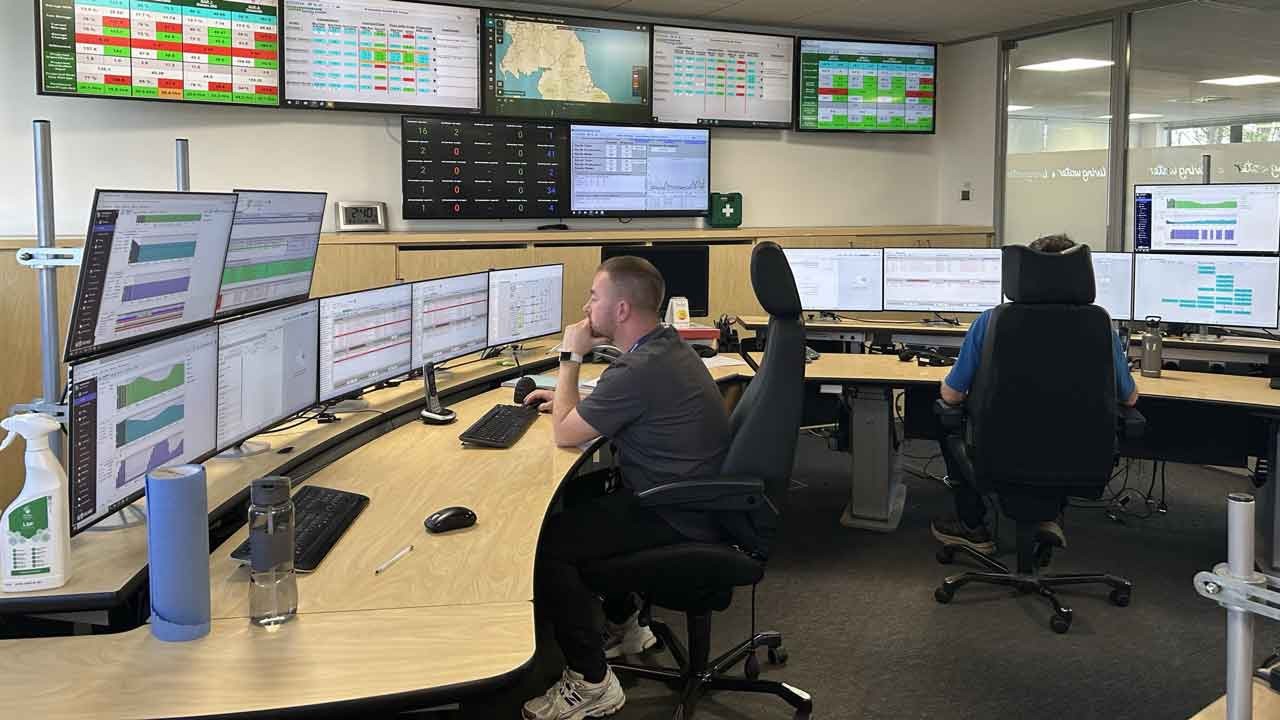
Control rooms monitor networks round-the clock and serve as central hubs for operational incidents and crisis events. Every day, control rooms across the UK receive thousands of alarms from their networks, alerting controllers to issues such as pressure changes, equipment faults, unusual flow rates, rising sewer levels, water quality anomalies and power failures.
As regulatory requirements have created a need for quicker responses, and the technology has advanced, the number of sensors feeding data into control rooms has also increased. This can make it challenging for controllers to identify which alarms signal the most serious risk and require the most urgent attention.
The SAM project was developed in response to this challenge. It will use machine learning and data modelling to prioritise the most important alerts and group them by root cause, gather and present relevant insights and recommend what action to take based on historical data.
This means that an event that might once have generated 20 separate alarms can be presented as a single, consolidated item, with priority ranking, historical insights and recommended actions. An earlier proof-of-concept reduced alarm volumes by up to 75%, demonstrating the potential for AI to help control room teams manage alarms more efficiently.
Following completion of the architectural design, the AI roadmap and the first draft of the Alarm Management Guidelines, the project is now entering its next phase which will focus on development of the AI and machine learning models, and on iterating the first draft of the Alarm Management Guidelines with the wider industry.
An interactive workshop for the project will be hosted by Spring in February. For more information, contact Sam Proctor, project delivery lead for SAM at Northumbrian Water, email samantha.proctor@nwl.co.uk.